


Block Printing
At Talah, many of our fabrics are printed using the traditional block printing technique. In this process, patterns are carved onto wooden blocks and printed on fabric by hand, one layer at a time. The rhythm of the hand, the pressure of the block, and the natural dyes or colours create small variations that make each piece slightly unique. It is a slow and thoughtful craft, and we work with block printing clusters in Rajasthan and Gujarat, where this practice has been carried forward for generations.
Needle Work
Our needlework is done slowly and carefully by hand. The process begins with making khakas on butter paper, where the motifs are first drawn and planned. These designs are then traced onto the fabric before the embroidery begins. The work is guided by our master embroiderer, who oversees the process and works closely with the team to maintain the fineness and detail of the stitches. Each piece involves patient handwork, often with tiny motifs and delicate needlework that takes time to complete. This slow process allows every embroidered garment to carry the mark of the hands that made it.


Jamdani Weaving
Our Jamdani fabrics are woven by skilled weavers in Bengal, many of whom work from small towns and interior villages where this craft has been practiced for generations. Jamdani is a delicate and intricate weaving technique where motifs are created directly on the loom, inserted by hand into the fabric as it is being woven. Unlike printed or embroidered patterns, each motif in Jamdani is built thread by thread, requiring patience, focus, and great skill. The process is slow, often taking many days to complete a single length of fabric. These weavers are true masters of their craft, and their quiet, detailed work gives Jamdani its lightness, texture, and timeless beauty. At Talah, we value this craftsmanship deeply and work closely with these weaving communities to bring these fabrics into our collections.
Chikankari
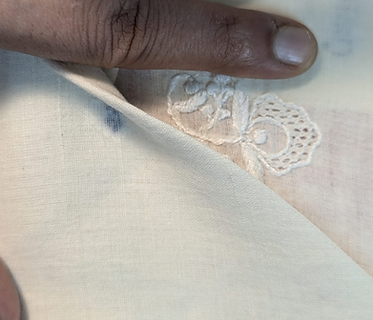
Our Chikankari is done by women artisans working in the outskirts of Lucknow and Aligarh, where many small groups are run and sustained by women themselves. Chikankari is a delicate hand embroidery tradition that involves several different stitches and techniques, each adding its own texture to the fabric. The process begins with the motifs being printed lightly on the fabric. The artisans then embroider over these markings using fine needlework. Techniques such as shadow work, jaali work, and a variety of traditional stitches are used to create depth and softness in the design. The fine jaalis, in particular, are made by carefully opening and weaving the threads of the fabric by hand, a skill that takes years to master. At Talah, this work is done on muslin jamdani, khadi, linens, and silks, where the lightness of the fabrics allows the embroidery to stand out beautifully. The motifs are subtle and detailed, carrying the quiet elegance that Chikankari is known for.

Kala Cotton
Our Kala Cotton fabrics are woven by artisans in Gujarat, where this indigenous cotton has been grown and worked with for generations. Kala Cotton is known for its natural strength and slightly textured feel, as it is a hardy, rain-fed crop that grows in the dry regions of Kutch without heavy irrigation or chemicals. The yarn is spun and then woven on looms by local weavers, creating a fabric that is breathable, durable, and full of character. Its natural texture and earthy quality make it especially suited for everyday clothing and home textiles. At Talah, we use Kala Cotton to create dresses and tops, and also in parts of our home collection. The fabric carries the simplicity and honesty of handwoven cloth, reflecting the quiet craft traditions of Gujarat.
Sozni
Our Sozni embroidery is done by women artisans from Kashmir who carry forward this delicate needlework tradition. Sozni is known for its extremely fine stitches, where the embroidery is done with a very thin needle and silk or cotton threads to create detailed patterns. The work is done slowly by hand, with artisans carefully following the drawn motifs and filling them with tiny, precise stitches. Many Sozni patterns are inspired by nature, with floral and paisley motifs that flow gently across the fabric. The beauty of this technique lies in its subtlety, where the embroidery looks almost like it has been softly drawn onto the cloth. At Talah, this fine handwork brings quiet detail and craftsmanship to our garments, reflecting the patience and skill of the artisans who make it.
